Certificate program
The private pilot certificate is where real aviators are made. We train you past the checkride standard, so the test is the easy part and the rest of your flying life is built on rock.
Program overview
Every new student has the same quiet question: what happens if something goes wrong up there? Here is our answer. Your emergency training starts at lesson three, long before your first solo flight. We practice the hard moments together, again and again, until your hands know what to do. You will not fly with fear. You will fly prepared.
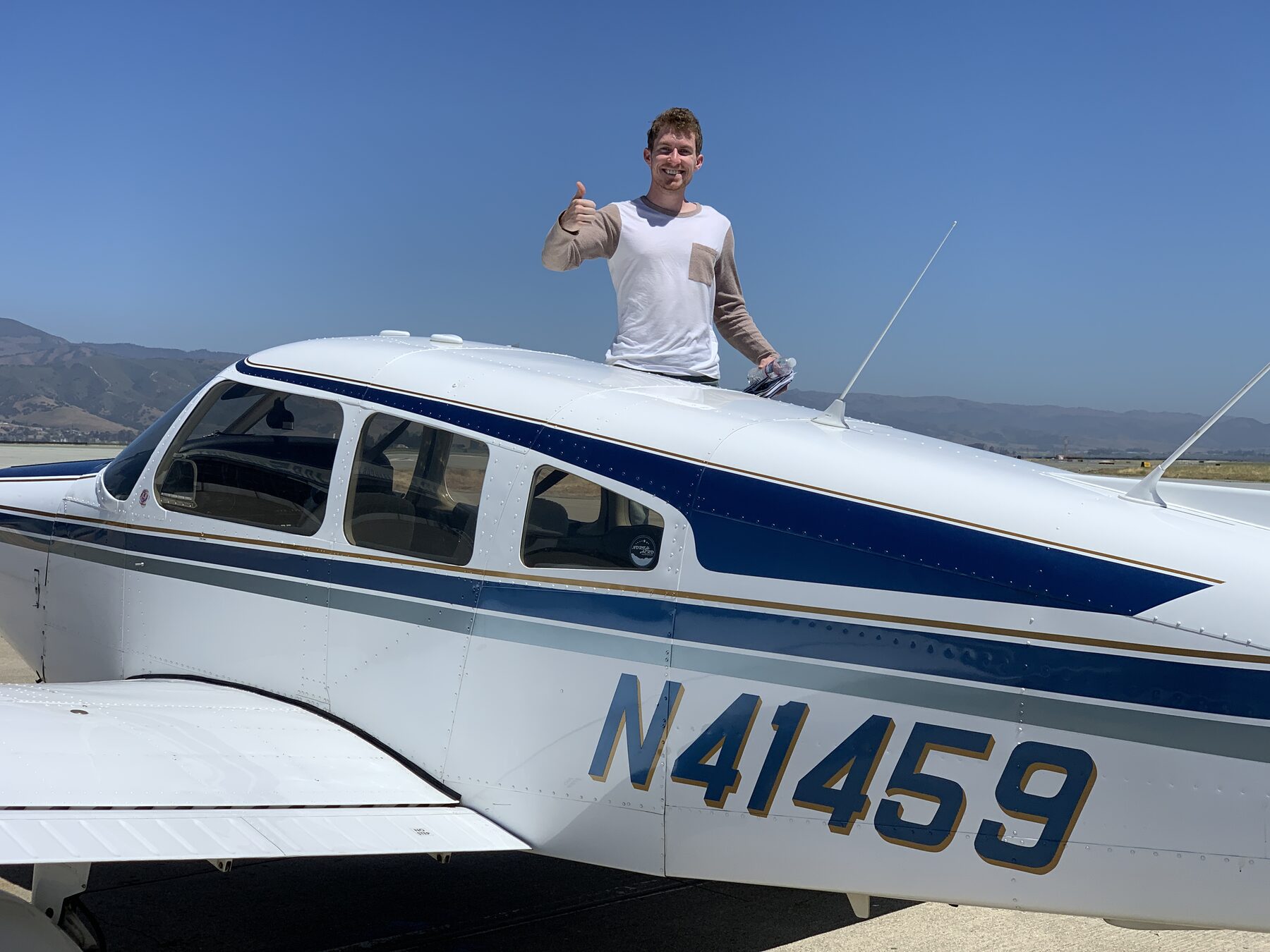
You get much more than a certificate. You learn smooth and confident control of the airplane in our vintage Luscombe or the Piper Warrior. The Warrior makes landings easy to learn, and the Luscombe teaches control better than any other trainer. You will make good decisions in the air because you were trained to handle difficult scenarios, not memorized answers. On checkride day you will be ready, and the test will feel like the easiest part of your entire training.
Curriculum highlights
Emergency procedures start at lesson three. Engine failures, fires, system problems. You train them in realistic scenarios until the response is reflex, not theory.
Pilotage, dead reckoning, VOR, and GPS. You learn to navigate with and without the electronics, so losing a screen never means being lost.
Real flight planning, fuel management, weather decisions, and diversion scenarios, flown to airports you've never seen before.
Night operations including a night cross-country. Visual illusions, lighting systems, and the discipline of flying when the horizon disappears.
Steep turns, slow flight, stalls, and ground reference maneuvers. You will understand why you fly each one, not just how to pass it on a checkride.
Time in the Luscombe teaches your feet to fly the airplane, a skill most modern training skips. Pilots who come through the tailwheel feel the airplane in a way others never do.
FAA requirements
These are the FAA minimums under 14 CFR Part 61. Most students need more time than the minimums, and anyone who tells you otherwise is selling something. We'll give you an honest estimate at your discovery flight.
Start before you fly
The ground half of this program runs online at ground.flynorthaero.com, in four phases matched to the flight lessons you are flying that week. No account, no email, no charge, and you can start tonight. Modules publish phase by phase as our curriculum team releases them.
Students who arrive with the knowledge already done spend their flight hours flying, instead of being told things they could have read at the kitchen table. That is the single biggest lever on what your training costs.
Investment
We publish real, all-in numbers instead of quoting FAA minimums that almost nobody finishes in. Current aircraft and instructor rates are on the pricing page, and the free Pilot Cost Guide breaks down the full cost of a private certificate in California, the five reasons students overspend, and seven strategies to finish faster and spend less.
The single biggest factor in your total cost is consistency. Students who fly two to three times a week finish sooner and spend less than students who fly when they can. We'll help you build a schedule that protects your budget.
Nobody writes one big check for a certificate. You buy one lesson at a time, and there are seven ways to fund those lessons that do not involve a loan.
See the seven ways to pay →Book a discovery flight and see what training here actually feels like, or grab the free cost guide and run the numbers first.